
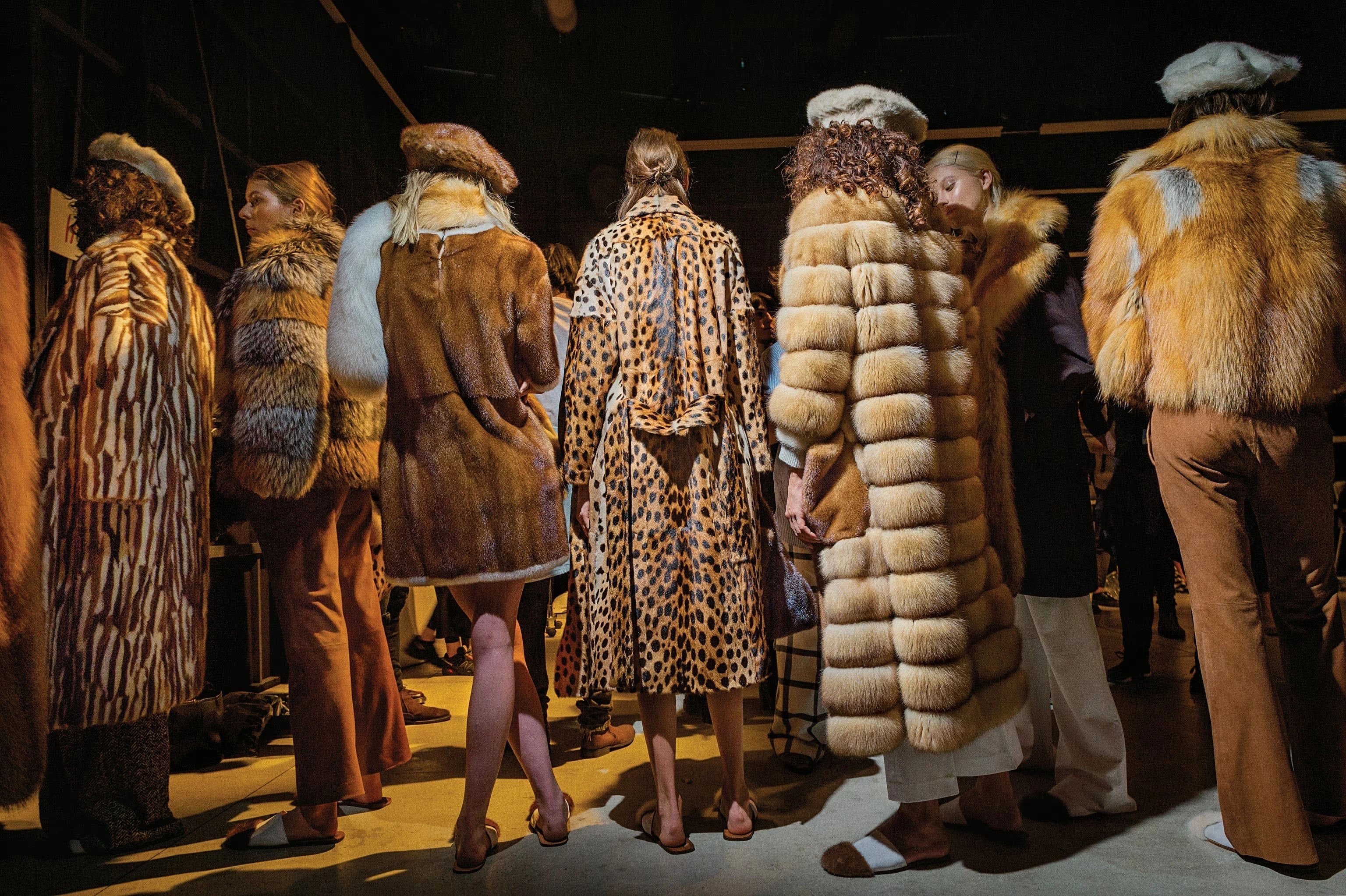

Faux virtue
Wearing real fur is anti-fur. Wearing faux fur is hypocritical.
These two statements may sound contradictory, but they are not.
Fur became the villain, and faux fur walked in wearing the halo. This trade we made deserves a closer look.
How fur became shorthand for decadence
Fur has long signaled luxury, wealth, and glamour. Desirable, and synonymous with status. Premium brands like Dior, Balenciaga, and designers alike sent mink down the runway as shorthand for decadence.
Fast forward to 1966, Fendi showcased the first exclusive all fur couture collection under Karl Lagerfeld. The press dubbed it “fun fur,” framing it as playful and modern. This shifted fur from bourgeois and matronly to something sharper, even youthful. Overnight, it began to read as modern luxury. For a moment, this image held. Then rot set in, and soon fur became a target.

Backlash, then branding
By 1970, the backlash had started. Time reported that women were choosing fake fur, or none at all. By the late 1970s, this concern became mainstream. Then came the Canadian seal hunt, a media event that detonated worldwide outrage. Shocking and televised. Animal rights activism found a global stage, and pressure hardened into policy. In 1983, Europe moved to restrict imports of seal pup skins and products. By 1980, fur had shifted from glamour to a moral flashpoint.
By 1990, PETA’s “I’d Rather Go Naked Than Wear Fur” campaign pulled the debate from the margins into pop culture. Fur sales plummeted and designers like Calvin Klein pledged to go fur free.
Meanwhile, faux fur sales skyrocketed. The protest became a product.
In 2001, Stella McCartney launched her house in Paris with a firm refusal to use fur. Faux fur stopped reading as a substitute and started reading as a choice. Later, Condé Nast said it would no longer feature new animal fur in editorial content or advertising, and by December 2025, the CFDA announced fur would be barred from the official New York Fashion Week schedule starting September 2026.
Today, faux fur is a billion dollar industry.
The hypocrisy, explained
This brings us back to our original statement: why is real fur anti-fur, and faux fur a hypocrisy?
First we need to understand what faux fur is. A synthetic pile of fabric stitched to a textile backing. Usually petroleum derived fibers engineered to mimic an animal pelt. Fibers that do not biodegrade, feeding a waste stream that can persist for decades.
It starts with fossil fuels and ends with chemical heavy dyeing and finishing. The pollution does not stay at the factory. It moves into water, soil, and habitat. Shedding microfibers into rivers and oceans, where animals ingest them: fish, turtles, seabirds, trickling into marine animals, including seals. This injures and blocks the gut, suppresses feeding and growth, triggers inflammation, and disrupts hormones and reproduction.
Faux fur does not spare animals. It harms them differently. That is the hypocrisy.
The flip
So what is the solution?
While real fur avoids plastic and can last decades, it also requires an animal to die. Faux fur looks like mercy, but pollutes our planet, and harms animals just the same.
Here is the flip. It may sound wrong, but a vintage mink or chinchilla cape is the cleaner choice than a faux coat entirely. So the answer is pre-loved: vintage, and resale.
If you buy new fur, you fund the kill. But fur lasts for decades, so the world is already drowning in it: closets, resale racks, estate sales, thrift stores. The answer is already here: vintage fur.
There is a glut of unused fur, and the stigma keeps the conversation blunt: fur equals cruelty, end of story. It is easy to call a stunning Persian lamb shawl cruel. But when bought secondhand, the money does not go to a breeder or a trapper. The animal is long gone, and your purchase does not commission another.
Faux fur sells a fix while adding a new harm. The answer is the one fashion avoids: buy less, buy secondhand, and keep what lasts.
And that is why real fur is anti-fur, and faux fur reads as hypocrisy in a softer costume.

Where demand ends
In conclusion, don’t go out and skin a puppy, but do not buy a plastic alibi from some department store either.
Instead, thrift yourself a real coat, and let the demand stop with you.



1 comment
Great article
Linda Carallis
Leave a comment
This site is protected by hCaptcha and the hCaptcha Privacy Policy and Terms of Service apply.