
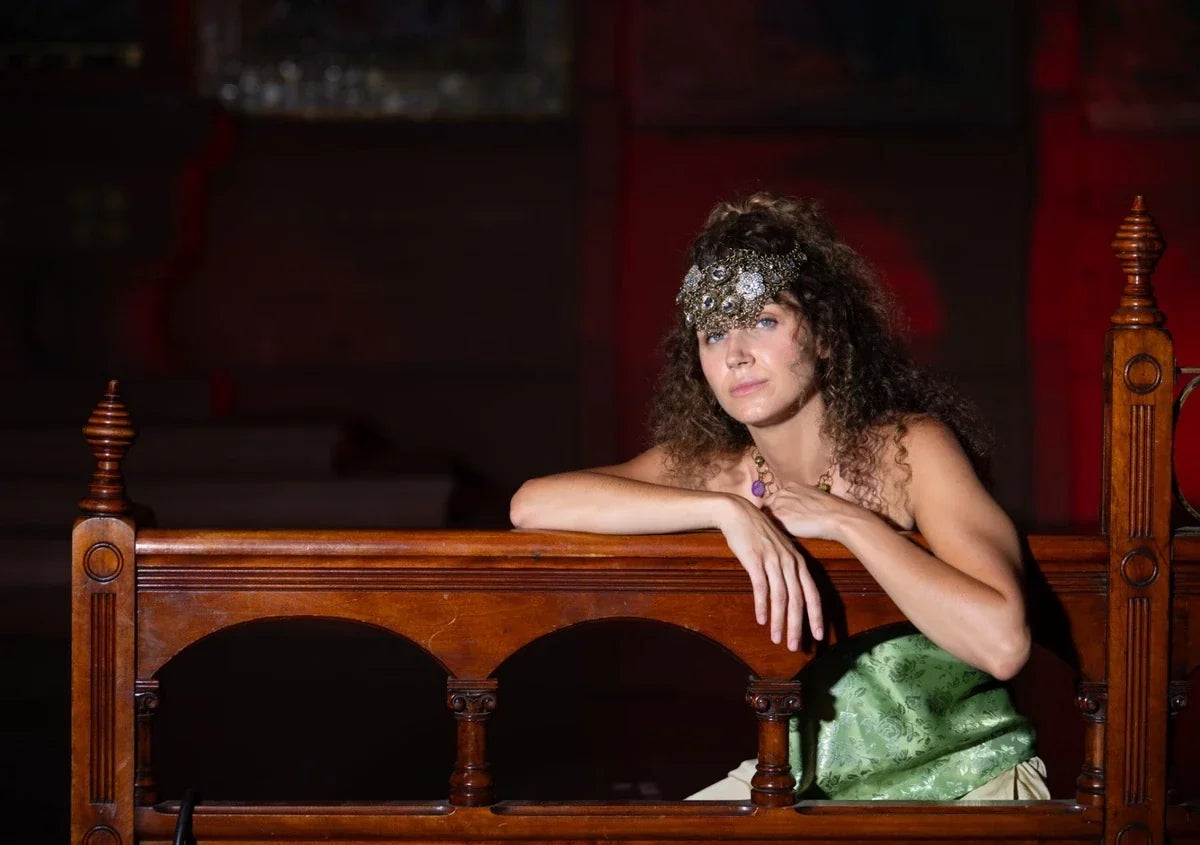
Sacred Threads, Fashion Show
Sacred Threads: An Invitation to Pay Attention

Before Fashion Was an Industry, It Was Ceremony
There are few things more universal than the act of getting dressed.
Across cultures and throughout history, clothing has been a part of weddings, coronations, rites of passage, mourning, celebrations, spiritual practice, and everyday expressions of identity. What we wear can say something about where we come from, what we believe, who we belong to, or how we want to be seen. Sociologist Joanne Entwistle describes dress in The Fashioned Body as "a situated bodily practice," shaped by the social and cultural world around us. [1]
While styles evolve, the impulse behind them remains remarkably consistent. Humans have always used textiles, ornaments, and adornment to tell stories about who they are.
Sacred Threads begins with that understanding.
On Friday, September 18, 2026 (mark your calendars!), MM Productions will bring Sacred Threads to Epiphany Center for the Arts in Chicago's West Loop.
For one evening, around 200 people will gather to experience the work of independent Chicago designers, live performance and premier hospitality. The runway begins at 7:00 PM, but Sacred Threads starts before anyone takes their seat. Observe all around you. There will be live music programming, a meditative sound bath, fragrance, moments of reflection, and time to actually talk to the people you're sharing the room with.
All of it comes back to the same idea: what happens when we give fashion our full attention?
Well, there are the clothes. There are also the people who created it, the histories behind its references, and the feeling of experiencing creative work in the same room as everyone else. The kind of human connection that is rare in today's world.
Fashion as Ceremony
The visual world of Sacred Threads draws inspiration from the grandeur of ancient royalty. Think rich textiles, old-world ornament, ceremonial dress, romantic symbolism, and spiritual reflection.
There is a reason these references feel so rich. Clothing and adornment have long communicated things about the person wearing them. In Byzantine culture, for example, The Metropolitan Museum of Art notes that jewelry could communicate wealth and commemorate occasions like betrothals and weddings. Textiles could carry their own messages through patterns and religious imagery. [2]
Sacred Threads looks across a much wider visual history. The references include Moroccan, Egyptian, and Algerian architecture, textiles, carved wood, metalwork, jewelry, and ceremonial dress. There are Persian, Moroccan, and Turkish traditions of pattern and decorative arts; Kashmiri and South Asian weaving, embroidery, draping, and adornment; Byzantine architecture and jewelry; Venetian textiles and glasswork; Andalusian and Mudéjar architecture and ornament; and Victorian British dress, symbolism, spiritualism, and mourning culture.
It's a long list, and that's kind of the point. These visual traditions have histories of their own, and many have also crossed paths over time.
The Met has documented centuries of exchange between Venice and the Islamic world, particularly through trade and diplomacy with the Near East. Luxury textiles were among the goods that moved between these regions, alongside raw materials and other objects. These exchanges created opportunities for artistic ideas and traditions to encounter one another. [2]
I find this part of fashion especially interesting. Inspiration can travel a very long way before it reaches us.
A pattern catches our eye. A piece of jewelry ends up on a moodboard. An embroidery technique inspires a detail on a garment. We might love what we're looking at without knowing anything about where it came from. Sacred Threads asks us to look a little closer.
Where Did That Come From?
A textile can carry an incredible amount of history.
UNESCO's documentation of handmade weaving in Upper Egypt describes a craft that has been practiced for centuries. The process requires knowledge of loom preparation, threading, weaving, and intricate workmanship. That knowledge has traditionally been inherited, with weaving practiced as both a family legacy and a profession. UNESCO also notes that handloom weaving remains a source of identity and pride within the communities that practice it. [3]
That gives us another way to think about the textiles and techniques we encounter in fashion.
Who developed them? Where were they practiced? What did they mean to the people who made and wore them? Who has kept that knowledge alive?
Fashion will always be inspired by the world around it. There is so much beauty to pull from. There is also value in knowing the story behind what we're looking at.
That sense of curiosity is part of Sacred Threads too.
So, What Actually Happens at Sacred Threads?
The evening unfolds over five hours, and arrival times depend on your guest tier.
At 5:00 PM, members of The Catacombs Circle are the first to arrive. They'll be welcomed into The Catacombs for an intimate reception and guided backstage preview.
At 5:30 PM, VIP Front Row guests arrive for a private pre-show reception.
The house officially opens for General Admission at 6:00 PM.
Then, at 7:00 PM, everyone takes their seats and the runway begins.
Collections from independent Chicago designers will be presented throughout the show, with live performances taking place between collections. Meditative sound will also shape the atmosphere of the evening.
Once the runway ends, the evening continues.
Guests can gather, talk, meet someone new, and connect with the creative community in the room before the night concludes at 10:00 PM.
You don't have to arrive, immediately find your seat, watch the runway, and leave. There is time before the show. There will be time after! The conversations throughout the event are part of the experience as well.
An Evening for the Senses
And then there is scent.
Workshop Apothecary, the Official Fragrance Experience Partner of Sacred Threads, will bring a mobile perfume lab to the evening. VIP Front Row and Catacombs Circle guests will be able to explore fragrance and customize a scent of their own.
Workshop Apothecary is also providing 200 scented rollers, one for every guest.
Scent has an unusual ability to bring a place or moment back to us. Something familiar can immediately recall a room, a person, or an evening from years ago.
Bringing fragrance into Sacred Threads adds another layer to how the night can be experienced and remembered. Hospitality continues through the gifting.
Every Sacred Threads guest will leave with something from the evening. Guests will receive a gift bag featuring pieces from event partners, crystals, self-care products, cosmetics and a few surprises being saved for show day.
FLÂUNJOR is providing 200 High Priestess Lip Jams, one for every guest. The herbal and botanical-infused product has a cooling mint sensation and leaves a chocolate-toned bronze finish with an iridescent shimmer.
Members of The Catacombs Circle will receive the complete VIP Front Row gifting experience along with a signature gift created exclusively for the Circle.
We’re so excited to share this experience with you.
Why Does Being Here Matter?
We have such incredible access to fashion now.
A runway can happen halfway around the world and within minutes we can watch it from Chicago. We can zoom into every look, save our favorites, watch backstage clips, and hear dozens of opinions about a collection before the day is over.
Being in the room gives us a different way to experience the work.
You notice the movement of a textile. The scale of a garment. The styling from head to toe. The sound filling the room. The reaction of the person sitting next to you.
There are also all the people behind what we're watching.
A runway brings together designers, models, stylists, hair and makeup artists, performers, producers, and many other creative contributors. The presentation is where all of that work finally meets an audience.
Sacred Threads gives that work time and attention.
It also gives people a reason to gather around it. Someone may discover a Chicago designer they didn't know before. A textile might lead someone to learn about a history they had never encountered. A conversation might begin between two people who arrived as strangers.
That's part of our team at MM Productions and our larger commitment to creating real-world experiences around craft, creative work, and human connection. For a few hours on September 18, around 200 people will share the room. They'll see the same collections, hear the same performances, and experience the evening together.
Sometimes being there really does make a difference.
Citations:
[1] Entwistle, Joanne. The Fashioned Body: Fashion, Dress and Modern Social Theory. Polity.
[2] The Metropolitan Museum of Art. Venice and the Islamic World: Commercial Exchange, Diplomacy, and Religious Difference. The Met traces centuries of commercial and cultural exchange between Venice and the Near East, including the movement of luxury textiles and other goods. (metmuseum.org)
[3] UNESCO Intangible Cultural Heritage. Handmade Weaving in Upper Egypt (Sa'eed). UNESCO documents the inherited knowledge, craftsmanship, and cultural significance of this centuries-old textile tradition. (ich.unesco.org)


Leave a comment
This site is protected by hCaptcha and the hCaptcha Privacy Policy and Terms of Service apply.